Feelings at nursery: talking them through with an empathy doll
How an empathy doll becomes a member of the group, how it gets a story of its own and how children use it to talk about joy, sadness, falling out and saying goodbye. Ideas for nurseries and pre-schools.
Six ideas for working with the doll
All six ideas rely on a doll that the children get to know over several weeks. Each one works at circle time or in a small group.
1. The doll joins the group
An empathy doll doesn’t move in overnight. First, introduce the doll by name. A few days later, the doll tells the children how old it is and who it lives with at home. That way the children get to know it bit by bit, just as they would a new child joining the group.
2. A story of its own
Give the doll likes and dislikes, a favourite food, a best friend and a few small worries. Make sure the doll’s story doesn’t mirror the life of any particular child in the group. It helps to keep a notebook of everything that has happened to the doll, so its story stays consistent.
3. Naming feelings
One morning, the doll tells the group about its day: “My tower fell down today, and I’d spent ages building it.” Together, the children think about how the doll felt, whether they know that feeling too and what might help it. Joy, anger, fear and pride can be talked about in the same way.
4. Falling out and making up
Sometimes the doll falls out with its best friend too, perhaps over a toy. The doll tells the children what happened, and they suggest how the two could make up again. Because it’s the doll’s quarrel rather than a child’s, it can be easier to talk about openly.
5. Every family is different
Perhaps the doll has two homes, one with Mum and one with Dad, or speaks a second language at home. Children who want to can say what is similar or different for them. Differences become something to talk about, without any child having to explain themselves.
6. Saying goodbye in the morning
Many children know how it feels when Mum or Dad leaves in the morning. The doll knows it too: it tells the children how much it missed its family and what helped. While children are settling in, this can be a way into talking about missing someone.
Tips for day-to-day use
The doll has its own place in the room and joins in at set times, such as circle time. A member of staff holds it and gives it a voice. Ask lots of questions and explain as little as you can: let the children say how the doll is feeling. Involve boys just as much as girls: whether a boy takes to the doll depends a great deal on how he sees the adults treat it. Keep the sessions short and stop while everyone is still interested.
Choosing a doll, and where the idea comes from
The model matters less than the doll becoming a real part of the group.
Which doll is suitable?
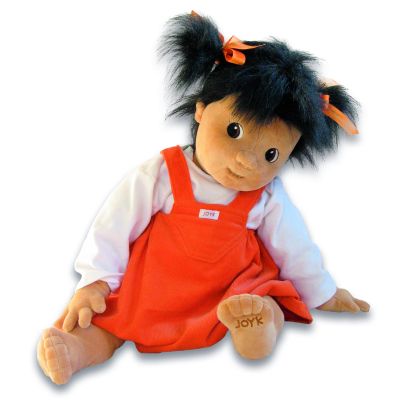
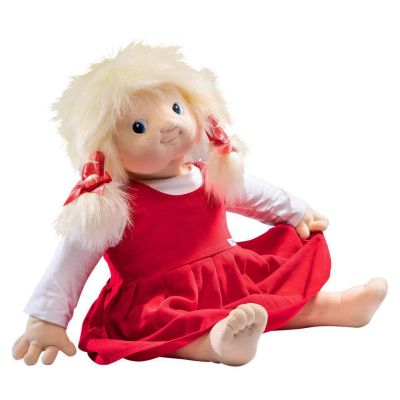
Joyk’s large child dolls suit group work. Child dolls with different skin tones and hairstyles can make it easier to bring different families and backgrounds into the conversation.
Joyk empathy dolls →What is the Persona Doll approach?
The Persona Doll approach is a method of its own, rooted in anti-bias education. The dolls are given a fixed identity and share stories from their lives, which gets children talking. You can draw on the core idea, a doll with a life story that opens up conversations, without adopting the full method.
Advice and paying by invoice
Need help choosing a doll for your group? Give us a call or send us a message using our contact form. As a nursery, school, therapy or medical practice or care home, you can also pay by invoice; once we have carried out a check, we switch this option on for your customer account.
Child dolls and animals from Joyk
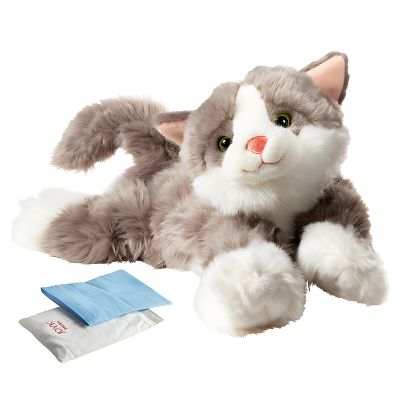
Any of these characters could be the doll that joins your group.